

Your eyes are remarkably good at making do with the vision you have. When road signs become harder to read—or the fine print starts drifting farther from your face—you may simply squint, adjust where you hold your phone, or turn on another light without giving the change much thought.
An annual visit to your eye doctor can uncover the vision changes you have gradually learned to work around. It also gives your doctor an opportunity to establish a clear record of your eye health and monitor it over time.
Everyone’s Vision Changes
Vision changes are often subtle, and because these adjustments happen little by little, it can be easy to assume your eyes are doing fine. A routine eye exam checks whether your current prescription still matches your needs. Your eye doctor can evaluate how clearly you see at different distances and whether an updated prescription could make reading, driving, computer work, or tasks feel more comfortable.
Children often have difficulty recognizing vision changes. They may assume everyone sees the classroom, a book, or the ballfield the same way they do. Our eye doctors can evaluate clarity, focusing, alignment, eye movement, and eye health as a child grows.
Eye Health
Reading letters on a chart is only one part of a comprehensive eye exam. Your eye doctor will also look at how your eyes work together, using the latest technology to examine their internal and external structures. These evaluations can help identify signs of glaucoma, cataracts, macular degeneration, diabetic eye disease, and other concerns. Some conditions can begin without obvious pain or vision loss, which is why being fine with your vision is not a reason to skip the annual exam.
Regular visits also give our eye doctors a helpful point of comparison. A single exam shows what is happening today, and annual exams create a clearer record of your eye health over time, making gradual changes easier to recognize.
A Reflection of Overall Health
Your eyes contain blood vessels, nerves, and tissues that an eye doctor can examine directly. In some cases, changes inside the eye may be associated with health concerns such as diabetes or high blood pressure. To be sure, an eye exam does not replace care from your primary healthcare provider, but patients with diabetes, a family history of eye disease, or other risk factors may need closer monitoring. Your eye doctor can recommend a schedule based on your health, age, symptoms, and history.
Your Vision & Your Daily Routine
Getting the right prescription is important, but doctors at Heartland Optical also want to know about how you use your eyes every day. Many of us spend the vast majority of our workdays looking at screens, for example, which places different demands on our vision than driving, reading, or spending time outdoors. Knowing what your day looks like helps your eye doctor recommend lenses and other solutions that fit the way you actually live.
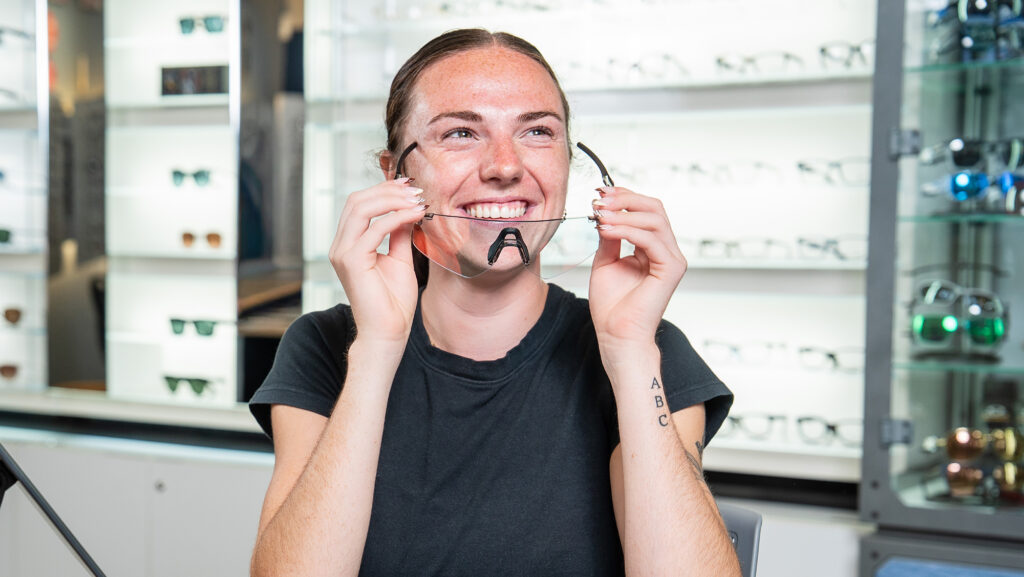
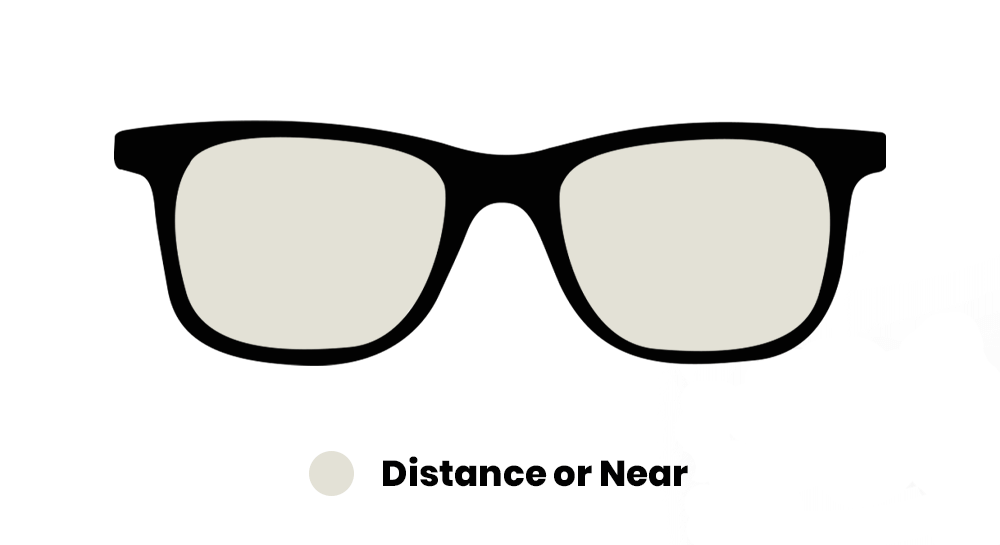
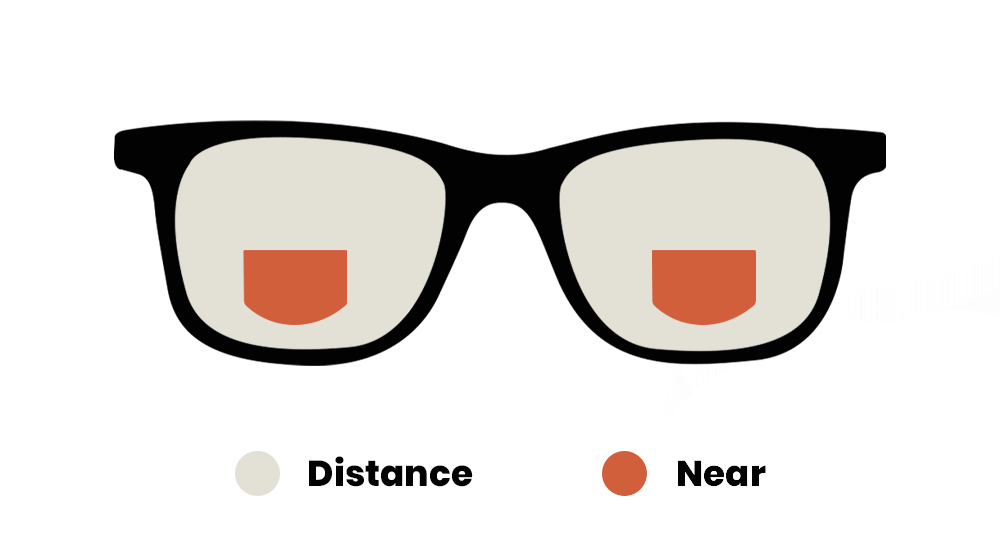
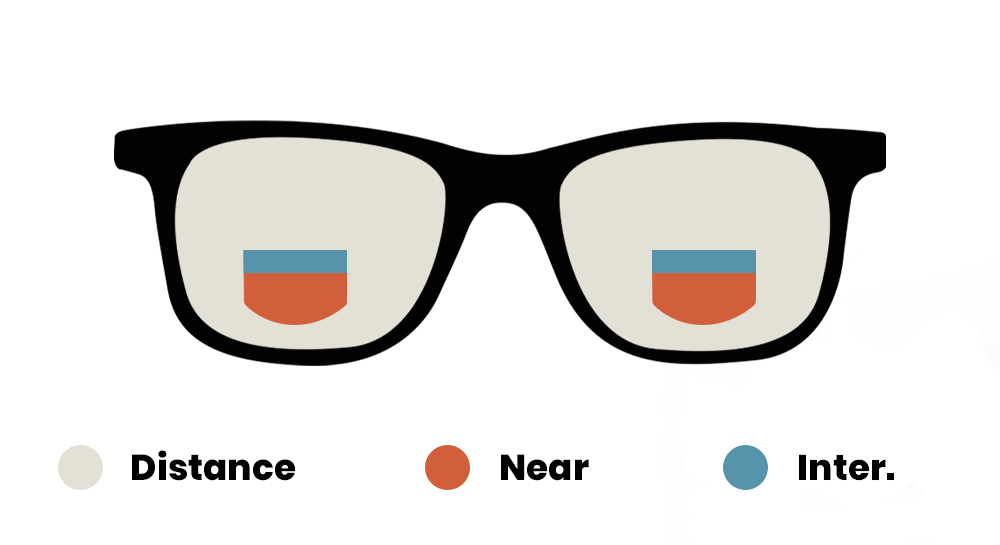
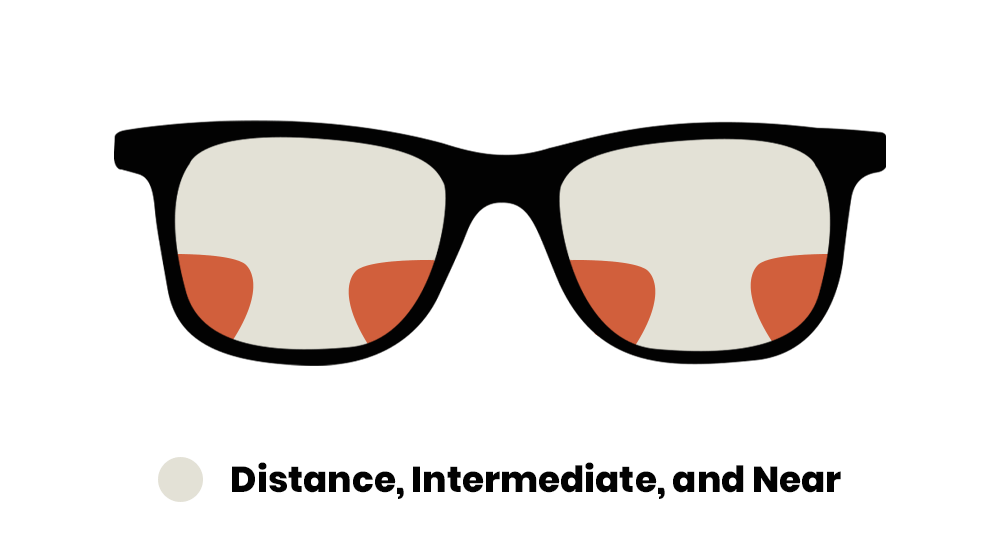
A conversation with our eye doctors shapes the recommendations they make for your eyewear, whether that’s glasses and contact lenses, progressives, or sports eyewear. Think of it like this: a prescription tells us how your eyes focus, but knowing how you live helps us recommend what will work best after your exam.
What Happens During an Eye Exam?
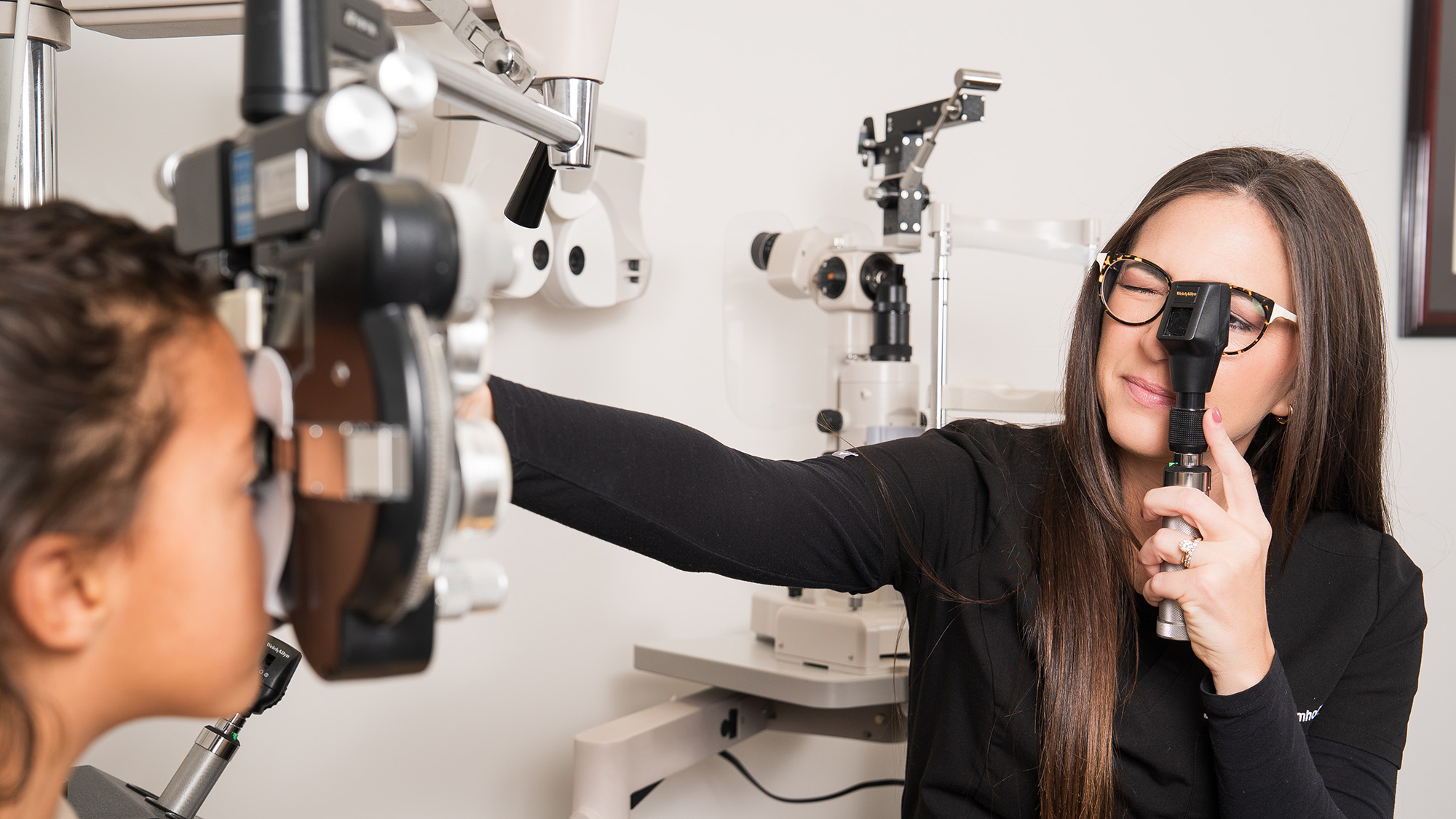
Your appointment begins with a conversation about your vision, health history, current eyewear, medications, and any concerns you have noticed. Your eye doctor may ask about headaches, eye strain, dryness, glare, screen use, or trouble seeing at certain distances. The exam may include prescription testing, an evaluation of how your eyes move and focus, eye pressure measurement, and a closer look at the front and back of the eyes. The doctors at Heartland Optical adjust the process based on your age, health, symptoms, and anything they might see during the exam.
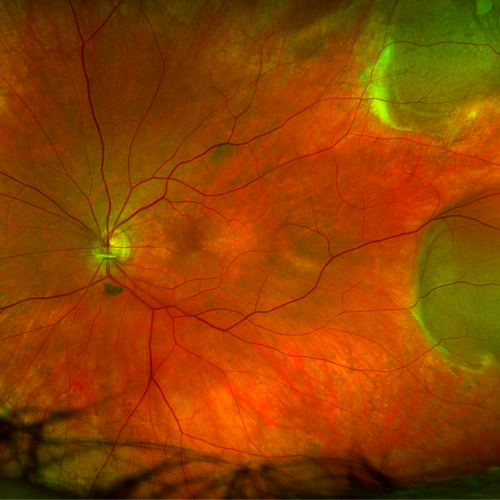
Our eye exams include an optomap® retinal screening with every comprehensive eye exam at no additional cost. While retinal imaging is often treated as an optional add-on, Heartland Optical includes the screening as part of your visit, saving patients at least $35.
The optomap® screening captures a 200-degree view of up to 82% of the retina in a single, non-contact image. This ultra-wide view allows your eye doctor to examine areas near the edges of the retina that may not appear in traditional retinal photographs. The image also creates a detailed record that can be reviewed and compared during future exams, helping your doctor identify and monitor subtle changes over time.
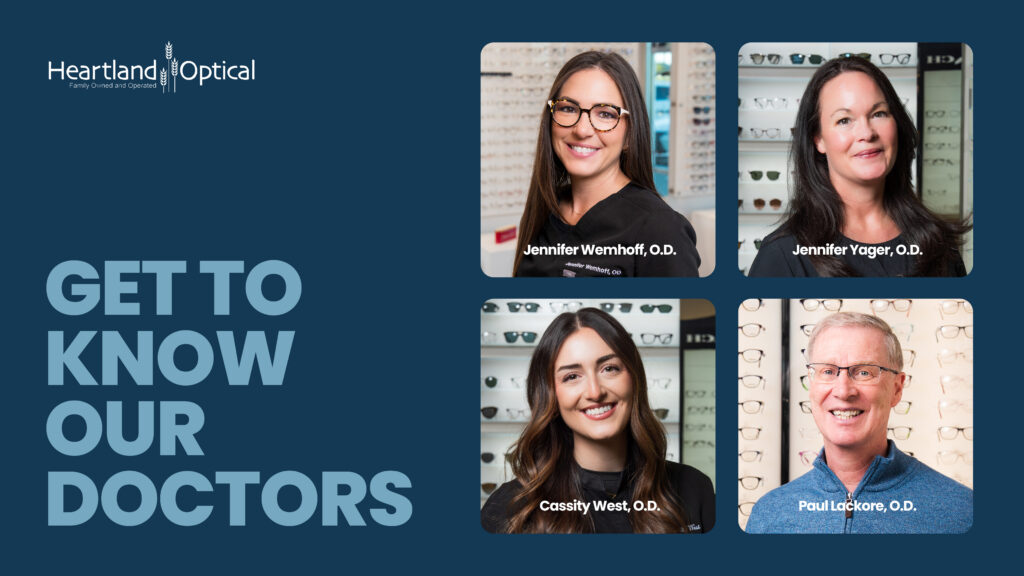
Meet Heartland Optical’s Eye Doctors
With locations across Lincoln and in Grand Island, we make it easier to find an eye doctor close to home. Our optometrists serve patients at our Central Lincoln, North Lincoln, and Grand Island offices, each bringing a personal approach to eye care.
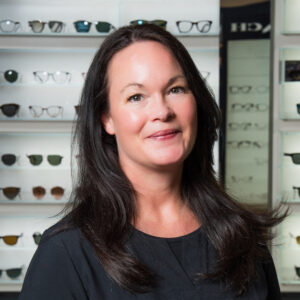
Jennifer Yager, O.D.
Raised in Thedford, Nebraska, Dr. Yager brings a kind, personal approach to caring for patients of all ages at our Central Lincoln office on 1012 North 27th Street.
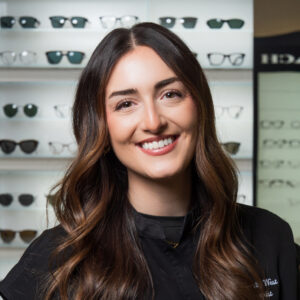
Cassity West, O.D.
Dr. West grew up in Crete, Nebraska, and discovered her interest in optometry after wearing glasses and contact lenses from a young age. She also sees patients at our Central Lincoln office.
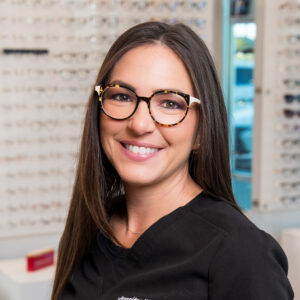
Jennifer Wemhoff, O.D.
Raised in Columbus, Nebraska, Dr. Wemhoff provides thoughtful care, honest answers, and clear guidance for patients at our North Lincoln office, located at 8222 Holdrege Street, Suite 5.

Paul Lackore, O.D.
Dr. Lackore has called Aurora, Nebraska, home for more than 30 years and cares for patients with a wide range of vision needs at our Grand Island office at 1437 North Webb Road.
Make Your Annual Eye Exam Part of the Routine
You do not need to wait for blurry vision or frequent headaches to visit an optometrist in Lincoln or Grand Island. An annual eye exam can confirm that your prescription is current, give your doctor a closer look at your eye health, and create time to discuss how you use your vision each day.
Schedule an eye exam today and catch the small changes before they become harder to overlook.